
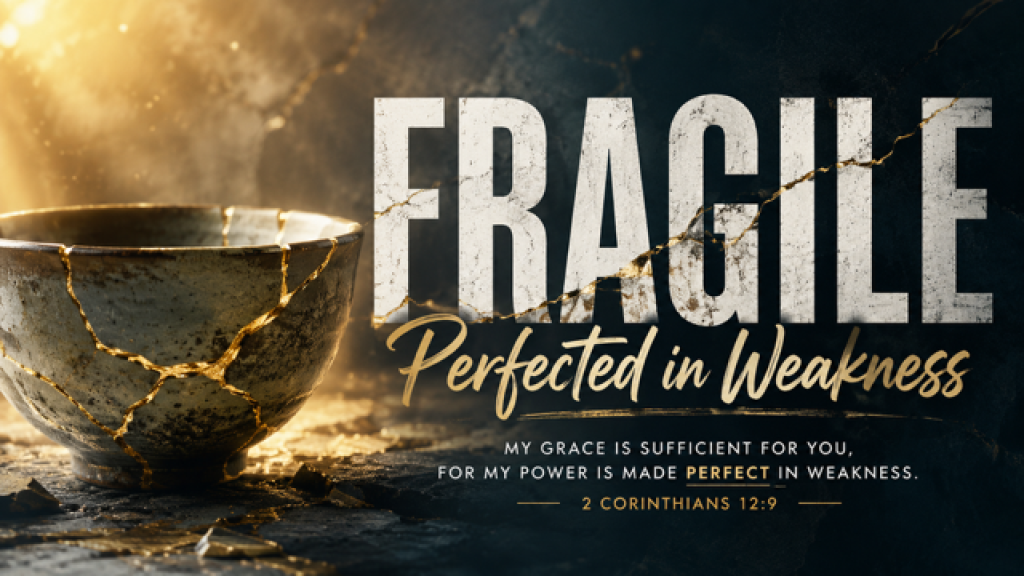
Passage: Isaiah 61:1-4
Summary
Today we're going to ask a question most of us have never let ourselves ask out loud: what if the very wreckage you've been waiting to get past is the site you were anointed for? What if the ruin isn't disqualifying you from ministry — it's your job site?
Sermon Questions
- The anointing's address (v. 1). Every word in Isaiah 61:1 (poor, brokenhearted, captive, bound) names a condition, not a credential. Why do we so easily assume the Spirit rests on people once they're strong and stable, rather than going looking for the broken? Where have you believed that lie about yourself?
- Bind up, not erase (v. 1). "Bind up" is what you do to a wound that's still a wound: you dress it, tend it, and stay close to it. How is that different from how we usually try to deal with pain, our own or someone else's? What would it look like to stay close to a wound instead of hurrying past it?
- The trade (vv. 2–3). God gives "a beautiful headdress instead of ashes" while the ash is still on people's heads. Why does it matter that the ashes were real and that God doesn't ask us to pretend they never happened? What "ashes" have you been waiting to clean up before you'd let God make the exchange?
- Planted for someone else's shade (v. 3). An oak isn't planted to admire itself; it's planted so others can lean on it and shelter under it. Who in your life found shade in someone else's healing, and how did that happen? Is it possible God comforted you not only for your sake but for someone who hasn't found you yet?
- Handed the trowel (v. 4). Isaiah says "they shall build up the ancient ruins," meaning the same people who were sitting in the rubble. What do you know about ruin from the inside that someone untouched by it could never know? Who is one person whose lot looks like yours used to, or maybe still does, and what's one step you could take toward sitting down next to them this week?